
Audi is well known for their reliability, functionality, and practicality while never compromising on luxury or performance. Because of this, Audi’s cars are bought and sold around the globe, with many motorists refusing to drive anything else. However, even the most intelligently-designed vehicles can develop a fault, given enough time or low maintenance standards.
It goes without saying that part failure of any kind should always be avoided, but when it comes to the most expensive parts of your car, such as the engine and the catalytic converter , this becomes essential. With this in mind, we will take a closer look at your catalytic converter, learn what it is, why clogs happen, and discuss the very best solution, should they occur.
What is a catalytic converter and what does it do?
Essential to any vehicle, the catalytic converter helps ensure that your Audi is always safe to drive by converting the harmful gasses released by fuel combustion into safer emissions . The catalytic converter reduces harmful vehicle emissions and pollution, making the environment safer for everyone.
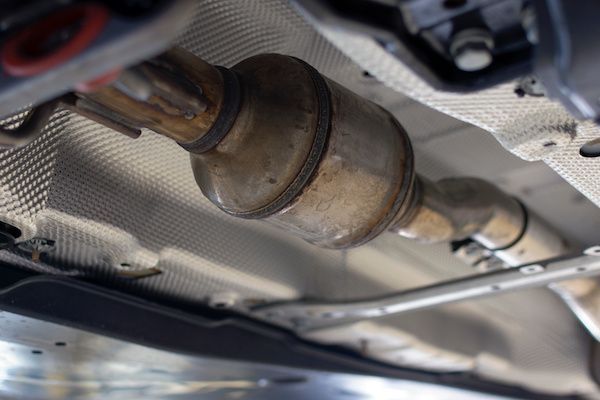
The catalytic converter is found inside the exhaust system and is usually out of reach from the outside of the car, due to the value of its parts, making it popular with thieves. The converter itself is a metal canister which is essentially a miniature science lab. Inside the container is valuable platinum and palladium , which are used as catalysts for the reaction. They convert the ignition gases into safer emissions, which are able to exit the vehicle via the exhaust pipe . Without this important component, even standing near a running car engine would be dangerous to your health.
What causes a catalytic converter to clog?
Your
Audi’s catalytic converter can become clogged for 2 reasons; either it is
blocked by contaminants or it has
overheated . Blockages from contaminants occur over time due to a slow build up
debris from the
gas that enters the converter. This debis can include
engine oil or
coolant , which in turn is typically caused by
damage to the cylinder head gasket or
defective seals or rings . While the engine may continue to work with these issues, the contaminants can quickly build up inside the converter, clogging it and preventing its function.
Frequent misfiring as well as an engine running rich can also cause clogs in your catalytic converter. An
engine runs rich when there is more fuel than air inside the engine, which is often caused by faults of the
MAF sensor or
O2 sensor . For optimal combustion, the air and fuel in the engine needs to be in perfect balance. If your engine runs too rich or
too lean , then the rate of
misfires you are likely to experience will increase exponentially.
Misfires often cause heat surges as well as the engine to run hotter than usual. The catalytic converter has to try to deal with these superheated gases , which can melt the catalysts found inside. This will not only lower performance but also cause the converter to become clogged.
Symptoms of a Clogged Catalytic Converter
Clogs can cause a catalytic converter to fail very quickly, and as previously mentioned, due to theft-prevention, accessing the converter can be difficult. This means it can be hard to tell if you have an issue. So being aware of some of the common symptoms can be a big help to detecting an overall problem. Therefore, if you notice any of the issues listed below, you should seek the aid of an
ASE certified mechanic ASAP:
- Sluggish engine performance
- Reduction in acceleration or acceleration feels strained
- Dark or white exhaust smoke
- A rotten egg smell (sulphur) from your exhaust
- Larger amounts of heat from under your vehicle
The Solution
Due to its expense and the complicated nature of the elements inside, when faced with a catalytic converter problem, your only solution is to
seek repairs from an expert mechanic as soon as possible. Remember that your converter is in charge of safeguarding your health, the health of those around you, and the environment too, and therefore shouldn’t be ignored.
Drivers living in or around
Marlborough, MA , should make
Professional Automotive their auto repair shop of choice. Every mechanic who works on your vehicle is an
ASE Certified Technician , and for complete peace of mind the dedicated team at
Professional Automotive also offer a
24 month/24,000 mile warranty on not only labor, but parts too!