
Your
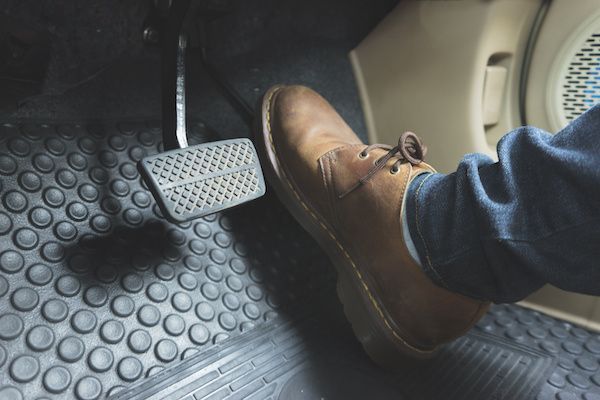
Toyota’s accelerator pedal plays a significant role in increasing or maintaining the speed of your vehicle. Pressing down the accelerator pedal initiates the motion of several mechanisms that influences the flow of fuel or oxygen in your Toyota’s manifold for your vehicle to accelerate. A
sticky accelerator pedal may cause the pedal to become stiff or return slowly to its initial position.
In some cases, the sticky accelerator pedal may be stuck, posing a danger to the driver and passengers, especially if the car is accelerating quickly, which could result in a crash. It is critical to ensure that your Toyota’s accelerator pedal remains in perfect condition.
Causes of a Sticky Accelerator Pedal in Toyota
A dirty butterfly valve in your vehicle’s throttle body
Carbon build-up over time may affect the functionality of the butterfly valve in your Toyota’s throttle body. The throttle body of your Toyota is attached to the intake manifold of your vehicle’s engine . The butterfly valve, which is found inside the throttle body, helps regulate the quantity of air entering the engine to increase its power.
The extent of the valve depends on how much you depress the pedal. A butterfly valve with a high carbon build-up may get stuck or difficult to move, resulting in a sticky accelerator pedal.
Faulty engine throttle
A faulty throttle may contribute to a sticky accelerator pedal in Toyota. If there is an issue with your Toyota’s electronic throttle control system , it may affect the sensor that controls your vehicle’s accelerator pedal position. Once this happens, your Toyota’s accelerator pedal may malfunction, which could be a serious safety concern.
When you experience a sticky accelerator pedal, you are advised to stay calm and try to pull your vehicle to a safe place, after which you may
require the service of a professional auto technician .
Wrong sized or improperly installed floor mats and other avoidable causes
Wrong-sized or improperly installed floor mats may also cause sticky accelerator pads. Your vehicle’s floor mat may interfere with your gas pedal and affect its functionality. Your Toyota accelerator pedal may get stuck if an object wedges the pedal without the driver’s knowledge.
During cold weather, water gathering under the driver’s footwear may cause the mechanism in your Toyota’s accelerator pedal to freeze.
A defective vacuum hose
One other reason you may experience a sticky accelerator pedal is a defective vacuum hose. If you have a leaky or cracked vacuum hose, your Toyota’s engine may receive an improper fuel/air ratio. When this occurs, it may affect your vehicle’s acceleration. A lean mixture resulting from a vacuum leak may cause a hard or sticky accelerator pedal, and you may find it difficult to control your vehicle’s acceleration.
Broken accelerator links
Your Toyota’s accelerator links connect the throttle plate in your vehicle’s engine to the accelerator pedal. The accelerator cable or link is responsible for pulling the throttle open when you press the accelerator pedal. Accelerator links are susceptible to breakage depending on usage and age. If the link snaps, it may cause the accelerator pedal to become stuck or slow to respond.
Contact Professional Automotive for Quality Repairs and Maintenance
If you want a certified and experienced Auto repair professional to get your vehicle back in shape, you have come to the right place. Professional Automotive offers outstanding repair and maintenance of Asian, Domestic, and European-made vehicles.
We perform various repair services such as
steering repair ,
muffler replacement ,
suspension repair ,
brake replacements ,
transmission checkups ,
engine diagnostics and
parts replacement , and
hybrid repair .
Our maintenance services include
alternator replacement ,
oil change service ,
battery replacement , and
radiator care . We have all the tools and equipment needed to ensure that your vehicle gets quality service. Our
ASE-certified technicians have several years of experience maintaining and repairing different car brands.
We offer a
24-month/24,000-mile warranty on our services and parts because we believe in our workmanship and our employees. At
Professional Automotive , we strive to ensure that you get the best car repair services you can find in
Marlborough, MA .
Contact us today for a fast, quality, and excellent car repair and maintenance service.