
A clunk during braking or a car that needs small steering corrections can seem like two separate problems. Sometimes they share a cause: movement in a worn control arm bushing. The brake system may still create stopping force, but the wheel can shift more than it should as that force travels through the suspension.
Control arm bushings help locate the wheel while allowing the suspension to move. When they deteriorate, braking feel, steering response, tire wear, and stability can all change. The important step is confirming which component is moving and how much, rather than assuming every pull or vibration comes from the brakes.
Control Arm Bushings Hold the Wheel in Position
A control arm connects the wheel assembly to the vehicle structure. Its bushings provide a flexible mounting point that absorbs some vibration while keeping the arm located. The rubber is designed to move in controlled ways as the wheel travels over bumps and the vehicle accelerates, turns, or brakes.
Some vehicles use fluid-filled bushings to manage vibration more precisely. Age, repeated loading, oil contamination, and damage can weaken either type. Small surface cracks do not automatically mean a bushing has failed. Separation, excessive movement, or fluid loss from a hydraulic bushing gives a more useful indication of its condition.
Worn Bushings Can Change Braking Feel
When you brake, the tire pushes against the road and transfers force into the suspension. A worn bushing can allow the control arm to shift under that load. You may feel a clunk, a brief steering change, or movement that appears only as the brakes are applied or released.
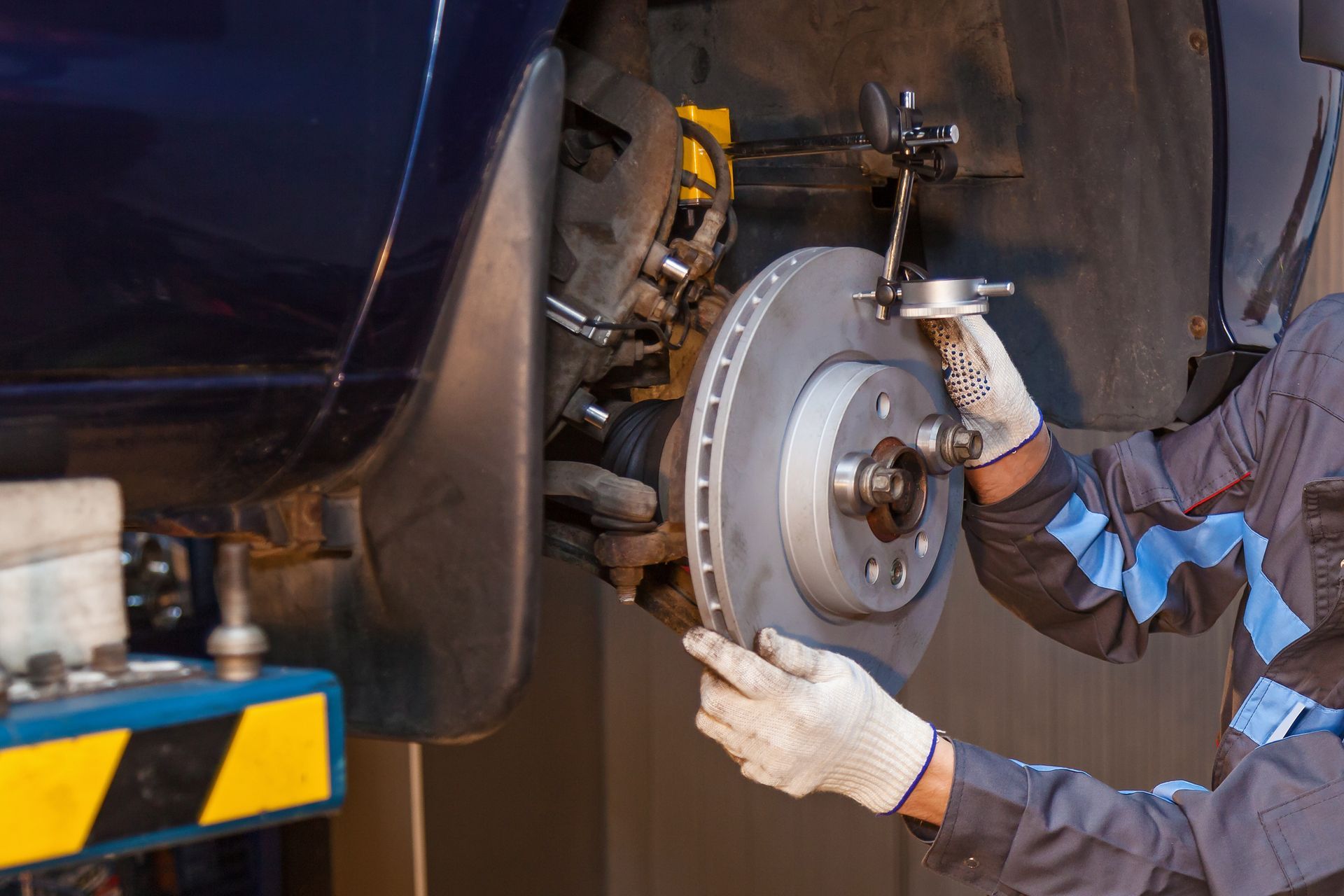
That movement can also make an existing brake vibration feel worse. However, a pulsing pedal or shaking wheel still needs a full brake and suspension inspection. Rotor condition, caliper operation, tires, and wheel bearings can produce overlapping symptoms. Replace a bushing only if you see evidence of excessive movement, not just vibration.
Control Arm Movement Can Affect Steering
The wheel’s alignment depends on its mounting points remaining in their intended positions. If a control arm moves excessively, the wheel angle can change as loads change. The car may feel less precise, require repeated corrections, or pull differently during acceleration and braking than it does while coasting.
An alignment reading taken with the car stationary may not reveal the full problem. A worn mounting point can move once the vehicle is driven. That is one reason to check suspension condition before making alignment adjustments. An alignment can't fix a control arm shifting in a damaged bushing.
Bushing Wear Can Affect Tires and Vehicle Control
Repeated changes in wheel position can contribute to irregular tire wear. You might notice wear concentrated on an edge, a feathered tread feel, or a pattern that returns after alignment service. Tire pressure and other suspension faults can create similar wear, so the pattern should guide an inspection rather than decide the repair by itself.
The safety concern is losing consistent wheel positioning, especially when steering or braking loads change suddenly. A small noise does not tell you how severe the movement is. New instability, a hard pull, or a large clunk with steering changes deserves prompt attention before you take the vehicle on another long trip.
Control Arm Bushing Inspection Should Check the Whole Assembly
The technician checks the bushings as specified for that suspension design. This may involve observing movement with the suspension loaded, inspecting the rubber and mounting sleeves, and comparing the movement with what is expected. The control arm, mounting hardware, and any integrated ball joint also need attention.
A ball joint or tie rod can cause similar looseness and may require a different repair. The inspection should distinguish those parts instead of treating every front-end clunk as a control arm problem. Road testing may help connect the observed movement with the conditions that produce the noise or steering change.
Bushing Replacement and Alignment Need the Correct Procedure
Some control arms accept replacement bushings, while others are more practical to replace as an assembly. The decision depends on the design, the arm's condition, available parts, and the labor involved. A damaged arm or worn integrated joint can change which option offers the more complete repair.
Many bonded rubber bushings require final tightening at the specified suspension position, often normal ride height. Tightening them while the arm hangs can preload the rubber incorrectly. After repairs, you may need an alignment and a road check to confirm wheel position and handling. Follow the vehicle manufacturer’s instructions for the exact procedure.
Get Control Arm Bushing Inspection in Marlborough, MA, With Professional Automotive
If your car clunks during braking, wanders, or develops recurring tire wear, Professional Automotive in Marlborough, MA, can inspect the control arms and related steering and suspension components. Describe when the change occurs so the inspection can focus on the loads that reproduce it and the parts that actually need repair.
Contact us to schedule a steering and suspension inspection.